Nancy Mace's Old Email Surfaced in the Ashley Madison Leak
In March 2024, The Spectator's Washington gossip column 'Cockburn' reported that an old realtor-era email address belonging to Rep. Nancy Mace turned up in the searchable database from the 2015 Ashley Madison hack. The column itself is careful: Ashley Madison never verified email addresses at signup, so anyone could have entered hers, and it flags a possible smear or prank. The verified fact is narrow, her email appeared in the leaked database, and Mace's office did not respond to requests for comment.
In March 2024, The Spectator's pseudonymous Washington gossip column "Cockburn" published a short item under a blunt headline: "Why is Nancy Mace's email in the Ashley Madison leak?"
The verified fact is narrow, and it is worth stating plainly before anything else: an old realtor-era email address associated with Rep. Nancy Mace (R-SC) was found in the searchable database left behind by the 2015 Ashley Madison hack. That is what the column reported. It is not a finding that Mace created an account, used the site, or had an affair, and the column does not claim any of those things.
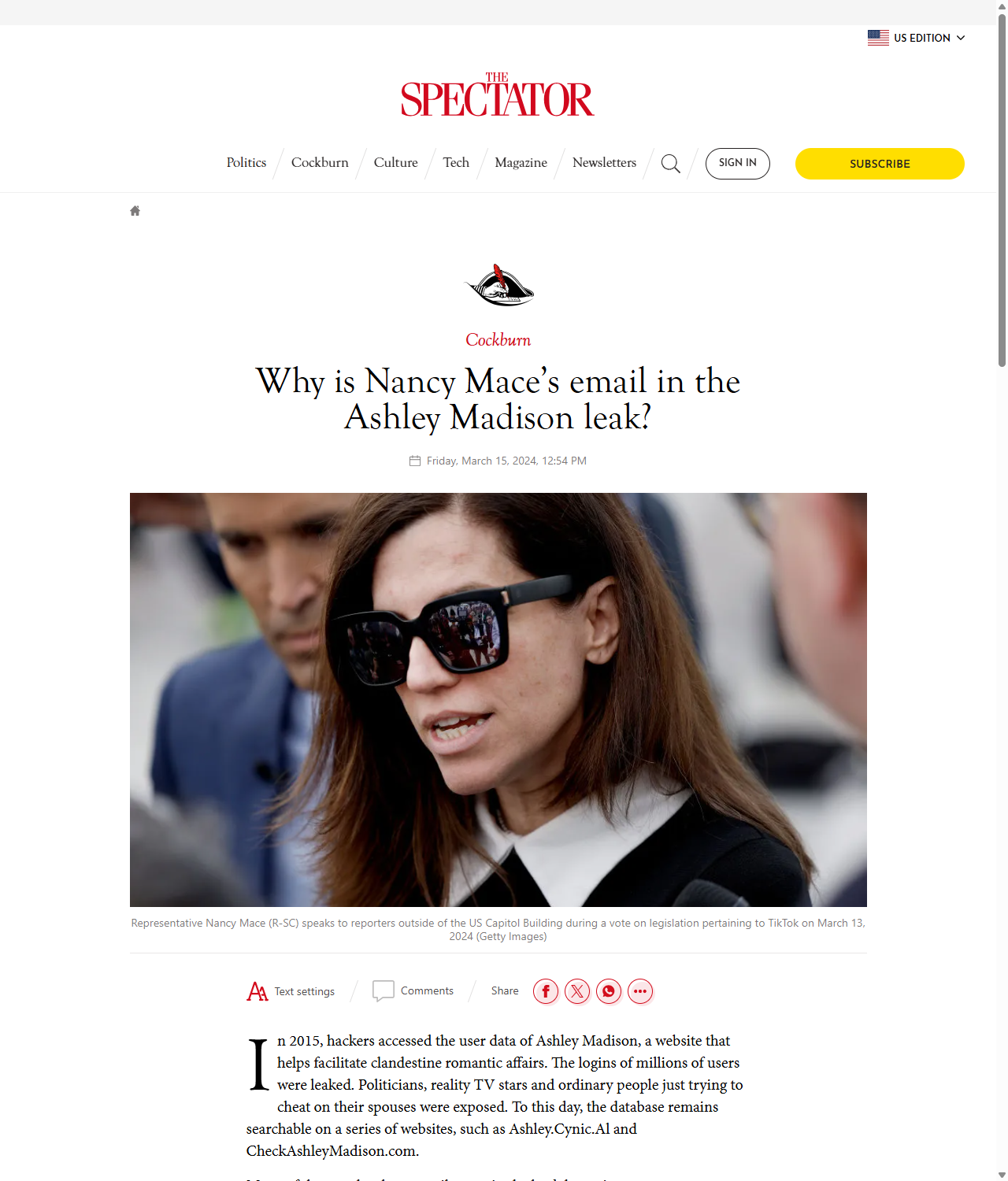
The Spectator (US edition), "Cockburn" column, March 15, 2024. Full article
What The Spectator Reported
Ashley Madison is a dating website built around extramarital affairs. In 2015 hackers stole its user database and dumped it online, exposing millions of accounts. As the column put it, the data never went away:
"To this day, the database remains searchable on a series of websites, such as Ashley.Cynic.Al and CheckAshleyMadison.com."
Against that backdrop, the column stated its finding:
"Cockburn confirmed this week that the old realtor email of Congresswoman Nancy Mace was found on one such database."
Why That Record Proves Little On Its Own
The single most important detail in the story is one the column itself emphasizes: Ashley Madison never verified the email addresses used to sign up. In the column's words, the site "did not require it to create an account." Because of that, anyone could enter anyone else's email address, which is exactly why a name showing up in the dump is not evidence that the named person ever touched the site.
The column leads with that caveat rather than burying it:
"Now, there could be an innocent explanation for this. Perhaps anti-Mace activists registered her email address at the time in an attempt to smear her."
It draws the same parallel other public figures have drawn when their addresses surfaced in the 2015 dump: one Trump administration official, the column notes, claimed he had made an account for "opposition research." The lack of verification is well documented as a general feature of the platform, and it is the reason the record cannot, by itself, establish who put the address there.
The Context
In 2015, Mace was not yet in public office. The column describes her at the time as "a businesswoman and author who had recently come in a distant fifth in a US Senate primary." She was married during the year of the hack and divorced her then-husband in 2019. She was first elected to the U.S. House in 2020.
Cockburn wrote that a request for comment sent to the email drew only an auto-reply saying it was "overwhelmed with messages," and that "subsequent requests for comment to both that email and to Mace's office have thus far gone unanswered." The item was single-sourced and does not appear to have been independently corroborated or picked up by other outlets.
So the record stands where the column left it: an email address tied to Mace is in a searchable copy of a hacked affair-site database, the platform's own lack of verification means that fact proves nothing about who entered it, and Mace has not addressed it. Readers can weigh it accordingly.
Sources and Related Coverage
Read next
 March 15, 2024 · Dispatch
Why is Nancy Mace's email in the Ashley Madison leak?
The Spectator's Washington gossip column 'Cockburn' reported that an old realtor-era email address belonging to Rep. Nancy Mace turned up in the searchable database from the 2015 Ashley Madison hack. The column is careful to note innocent explanations: Ashley Madison never verified email addresses at signup, so anyone could have entered hers, and it raises the possibility of a smear or a prank. Mace's office did not respond to requests for comment.
 September 5, 2026 · Dispatch
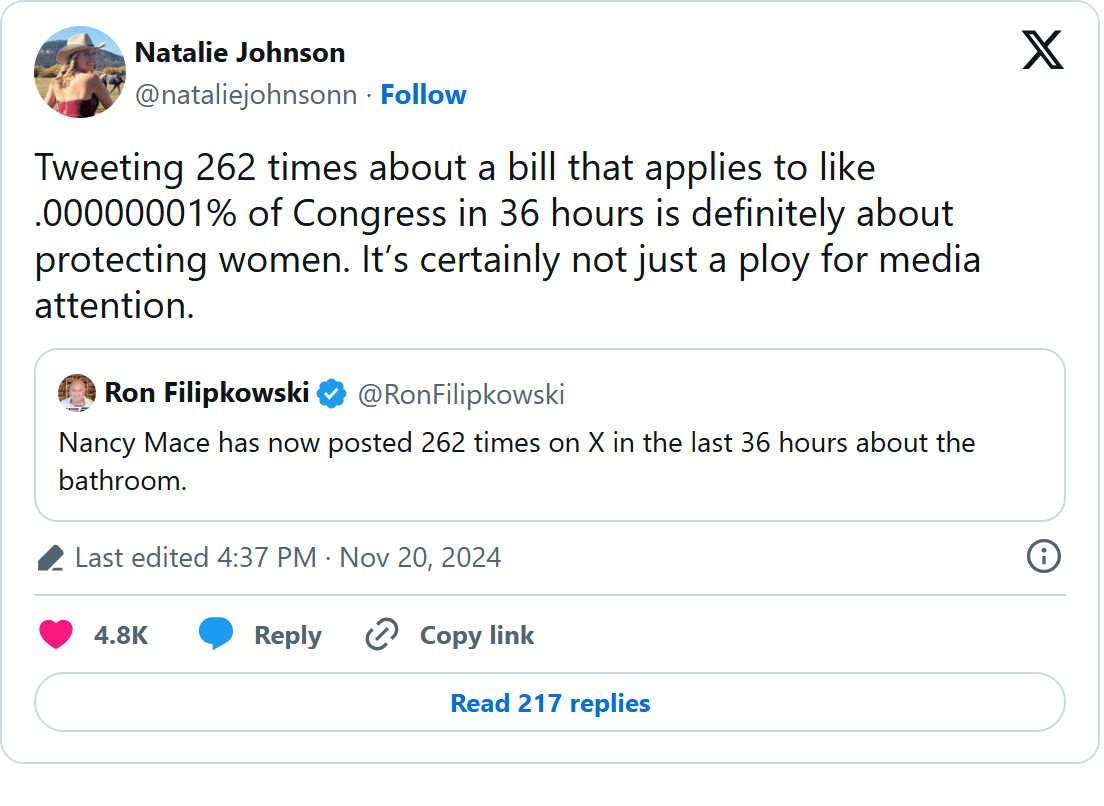
"262 times in 36 hours": Mace's X habit becomes the story
On November 20, 2024, former Mace communications director Natalie Johnson called out the sheer volume of Nancy Mace's X posts about the Capitol bathroom fight, writing that Mace had tweeted 262 times in 36 hours about a bill aimed at one incoming member of Congress. The post became a clean public marker for a broader pattern: X posts flagged for hateful conduct, official-account replies aimed at private citizens, and later disputed reporting that former staffers were told to use burner accounts to boost her online.
 June 19, 2026 · Dispatch
Remember when Nancy Mace read a CNN guest's "kissy emoji" text into the congressional record?
A look back. On September 19, 2024, Rep. Nancy Mace used part of a House Oversight Committee hearing to enter into the official record a screenshot of a text she said Vanderbilt professor Michael Eric Dyson sent her after they clashed on CNN: "Shh don't tell anybody. We look good together," with a kissy emoji. Dyson denied hitting on her, said it was a joke, and called Mace "a bigot and racist." The clip is circulating again. In her own words and his, readers can judge.
 June 7, 2026 · Dispatch
On her first recorded call with Ali Berg, Mace lays out a civil suit against Patrick Bryant: 'He can sell a building or two, settle, be done' and accusers 'can get 150 K each'
FITSNews published the full audio of Nancy Mace's first recorded phone call with Ali Berg. Across 44 minutes Mace asks the call stay 'private,' spends little time on the alleged assault or the man she names as the assailant, never offers a victim advocate or a referral to law enforcement, and instead pitches a civil lawsuit against her ex-fiancé Patrick Bryant, predicting he will 'sell a building or two, settle,' and that accusers could 'get 150 K each.'
- June 7, 2026 · Dispatch
"You have to hit him in his pocketbook with a civil suit": the first recorded call with Ali Berg, in her own words
A produced supercut of Rep. Nancy Mace's first recorded phone call with Ali Berg (April 6, 2024), published by FITSNews on June 7, 2026, after the recording was produced in ADW v. Berg. Across 44 minutes Mace pitched a civil lawsuit and a payout, never mentioned the police, and never offered Berg a victim advocate or counselor.
 December 17, 2024 · Dispatch
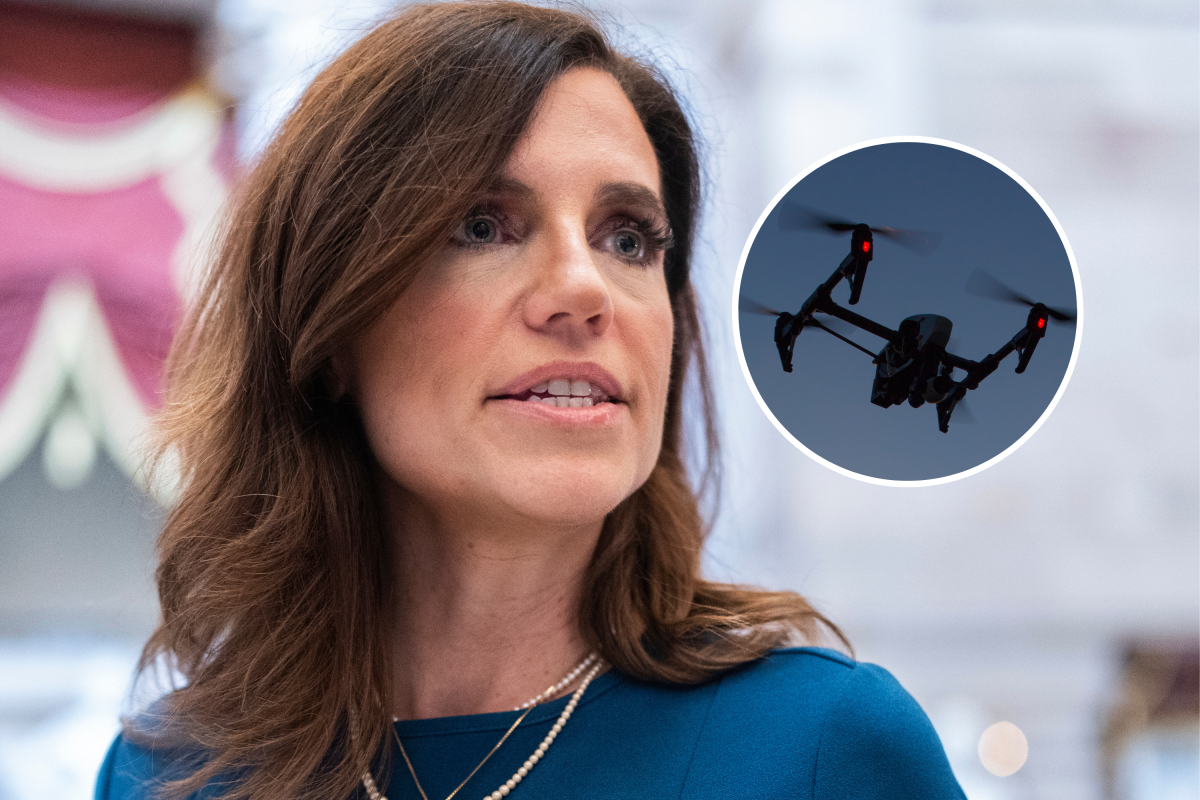
Mace says mystery drones being "craft from outer space" has "to be on the table"
Asked in December 2024 whether the wave of unidentified drones over New Jersey and the Northeast could be alien in origin, Rep. Nancy Mace said on the record that 'craft from outer space' had to be 'on the table' as an option.