Russell Fry
U.S. Representative for South Carolina's 7th District who unseated an impeachment-vote Republican in 2022 and entered the 2026 special Senate race to succeed the late Lindsey Graham.
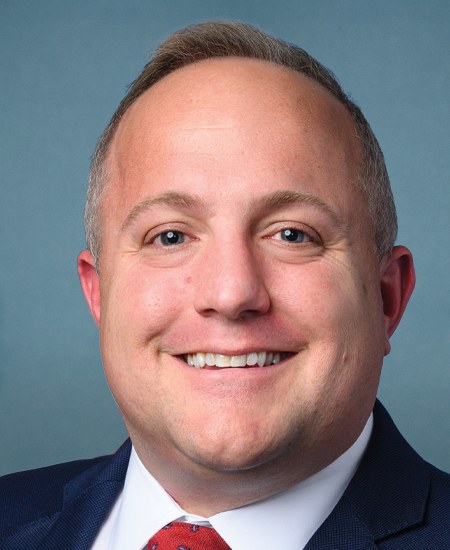
Russell Fry is the Republican U.S. Representative for South Carolina's 7th congressional district, first elected in 2022, who announced a campaign for the U.S. Senate on July 20, 2026, in the special election to succeed the late Sen. Lindsey Graham.
What Happened
Background. Fry, 41, is based in Surfside Beach and represents SC-7, which covers the Grand Strand and Pee Dee region. He sits on the House Judiciary Committee.
2022, the primary that unseated Tom Rice. Fry entered politics after five-term incumbent Rep. Tom Rice voted to impeach President Donald Trump following January 6, one of only ten House Republicans to do so. Trump endorsed Fry against Rice on February 1, 2022. In the June 14, 2022 Republican primary, Fry defeated Rice 51.1 percent to 24.6 percent, becoming the first of the ten impeachment-vote Republicans to lose a bid for reelection. Fry went on to win the general election and was reelected in 2024; he is in his second full term.
July 20, 2026, Fry enters the Senate race. Following Graham's death on July 11, 2026, and Gov. Henry McMaster's appointment of Graham's sister, Darline Graham Nordone, as interim senator, Fry announced his own Senate campaign on X at 8:01 a.m. ET: "South Carolina, I'm in! I'm running for the U.S. Senate... I will be your conservative MAGA candidate in the special primary Senate election this summer." He became the fourth declared Republican candidate, after Mark Lynch, Duke Buckner, and Rep. Ralph Norman. Candidate filing for the special primary opens July 21 and closes July 28; as of his announcement, no candidate, including Fry, had yet filed.
Trump's relationship with Fry. Trump's 2022 endorsement helped Fry unseat Rice, but as of Fry's Senate entry, Trump had not endorsed him for the Senate seat. Around July 14, 2026, on Newsmax, Trump praised Fry without endorsing him: "I think Russell Fry, a young congressman, is outstanding. I could see that happening. He's a very talented person." Trump had already endorsed Nordone for the seat on July 17, 2026.
July 20, 2026, Mace objects to dual candidacies. About an hour after Fry declared, at 9:00 a.m. ET, Rep. Nancy Mace posted an objection on X to House members seeking a second office while holding their seat. She named no one. Her post read, in full:
"If you're running for two offices at once, you've already told us who you are. That's not about politics anymore - that's about power.
You're either with the people you serve or you're not.
And make no mistake about the math: a sitting House member who wins the South Carolina Senate in November vacates his Republican House seat until next May. That narrows an already razor-thin majority and puts the Speaker's gavel in play. I will never hand Hakeem Jeffries that gift.
This is an escalation that harms our country, our state and our values at such an important time in our nation's history."
Although Mace named no one, Fry is the only declared candidate the description fits. He won the SC-7 Republican primary on June 9, 2026 and is already his party's nominee for that seat, so he would appear on the November 3 ballot for the House and the Senate at the same time. The Post and Courier reported that Fry is "already the duly elected Republican nominee for his congressional seat" and that "nothing in state law would prevent Fry from running both for Graham's seat in the Senate as well as his current seat in Congress." The other sitting House member in the race, Rep. Ralph Norman (SC-5), did not file for House reelection after entering the governor's race; Wes Climer is the Republican nominee for SC-5, and Norman's House term ends in January 2027 regardless of the Senate outcome. Mace herself was not on the November ballot, having not sought reelection to SC-1 after losing the June 9 gubernatorial primary.
The vacancy timeline. Mace's "until next May" figure tracks state law. A U.S. House seat cannot be filled by appointment, since Article I, Section 2 of the Constitution requires the governor to "issue Writs of Election to fill such Vacancies." Under S.C. Code Section 7-13-190, "the special election must be on the twentieth Tuesday after the vacancy occurs," with a primary on the eleventh Tuesday and a runoff on the thirteenth. Rep. William Timmons, raising the same majority concern on July 15, said any member already on the ballot for reelection who won the Senate seat "would leave their House seat vacant on January 3, 2027"; twenty Tuesdays from that date falls in late May 2027. Mace's post treats that gap as fixed and does not address that the statutory clock runs from whatever date the vacancy occurs. Neither Fry nor Norman had publicly responded to the post at the time of writing, and no candidate has said publicly what they would do about the House seat.
Separately, the South Carolina Election Commission said on July 15, 2026 that "candidates have appeared on general election ballots for more than one office in previous South Carolina elections," while expressly declining to comment on any specific candidate's situation.
Standing in the only post-Graham poll. An Emerson College Polling survey for Nexstar Media, fielded July 14-15, 2026 (500 likely Republican special-primary voters, margin of error plus or minus 4.3 points), put Fry at 9 percent. That poll was conducted before Fry, Norman, and Buckner had formally declared, so it reflects pre-announcement name recognition rather than a settled field. Rep. Ralph Norman led at 16 percent, followed by Mark Lynch at 13 percent, with Rep. Nancy Mace and Lt. Gov. Pamela Evette tied at 10 percent. Eighteen percent were undecided.
Sources
- Rep. Russell Fry, official biography
- FOX Carolina, Rep. Russell Fry enters race for late Sen. Lindsey Graham's seat (July 20, 2026)
- Rep. Russell Fry, Senate campaign announcement on X (July 20, 2026)
- FITSNews, 2026 Senate Special Election: Dates And Ground Rules (July 12, 2026)
- South Carolina Election Commission, special U.S. Senate filing calendar
- Emerson College Polling, South Carolina 2026 Poll: No Clear Leader to Replace Late Sen. Graham on Ballot (fielded July 14-15, 2026)
- Rep. Nancy Mace, post on X objecting to dual candidacies (July 20, 2026)
- South Carolina Election Commission, SEC Addresses Ballot Question (July 15, 2026)
- Post and Courier, on Fry running for both the Senate and his House seat (July 2026)
- S.C. Code of Laws Section 7-13-190, special elections to fill vacancies
- FITSNews, William Timmons: Graham succession drama could imperil GOP majority (July 15, 2026)
- Wikipedia, Russell Fry