What REALLY Happened in The Cockpit? | Nancy Mace
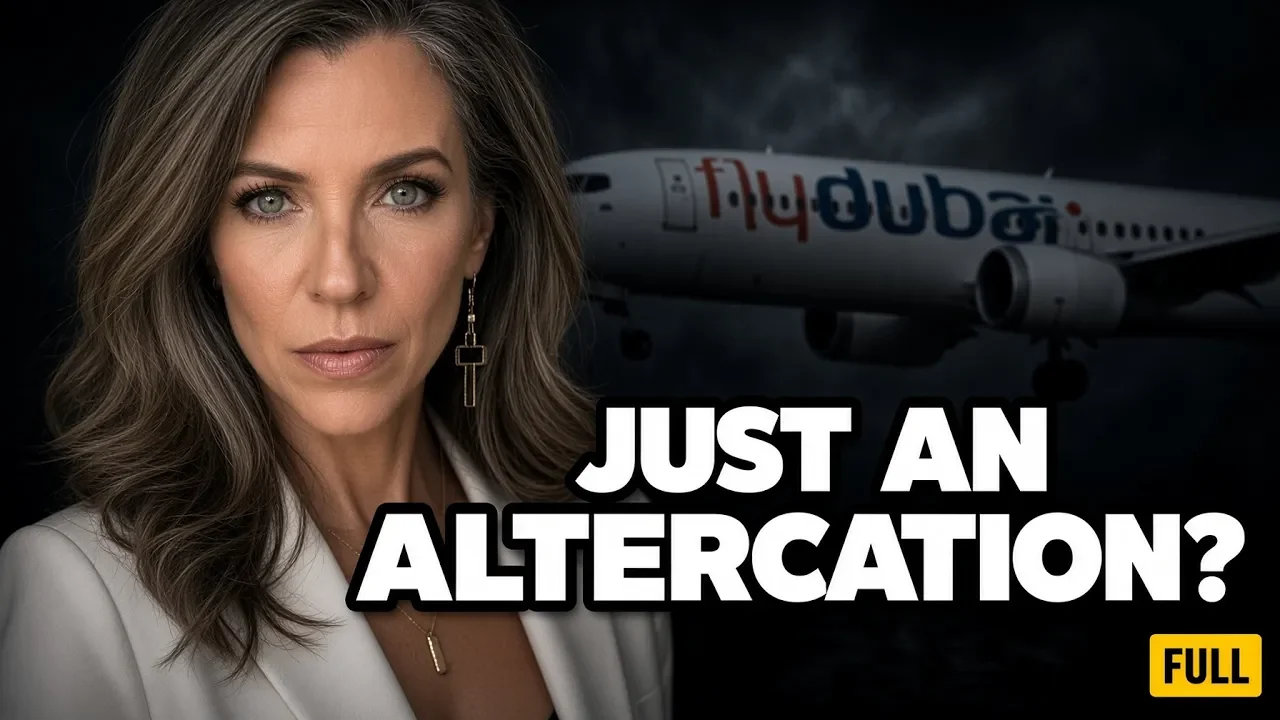

[00:30] Good evening. This is Congresswoman Nancy Mace, and this is the Get Maced podcast. We just hit our milestone on YouTube of 75,000 subscribers. Thank you. It's now time to get to 100,000 subscribers, and we're going to need your help. I need you to subscribe. Hit the little subscribe button. Wednesday, a fly Dubai airline flight out of Dubai was headed for Tel Aviv, plane full of Jews, about 180 passengers. When the pilot took out a knife, most of the folks on the plane were Jews. They were Israelis. There were a handful of Americans.
[01:12] These are the terrifying moments inside a passenger jet that was seconds from disaster.
[01:18] The pilot stabbed the captain. The pilot stabbed the other pilot in the cockpit. There was blood everywhere. The plane dropped 15,000 feet in seconds. The captain, Smit Makhchar from India, was bleeding badly. He still got in the cockpit. He was in the cockpit. He opened up the cockpit door so passengers and crew could stop the attacker, get the plane back up to a better elevation, higher elevation, and land the plane in Saudi Arabia, where it safely landed. Interestingly, having a plane full of Jews land in Saudi Arabia is certainly...
[02:00] diplomacy. I think that is probably the right word to call it. And Israel's prime minister said that the captain prevented the next 9-11. I think what happened is a tremendous act of heroism that prevented another 9-11 style crash of an entire airplane.
[02:21] Now, the plane was diverted after, quote, an altercation between the pilot and co-pilot. The plane was diverted after an altercation between the pilot and co-pilot. pilot, according to the New York Times. New York Times says this was just a little altercation between friends, between pilots. An altercation is like being at the Waffle House at 3 a.m. and two guys are arguing over the hash browns. Two guys sitting in first class, rubbing elbows, arguing over who gets the middle console for the elbow rest. That's an altercation. Me staring down Corey Mills is an altercation. An altercation is not trying to stab a guy to death and plunging the plane from 30,000 feet in air right into the ground. That is not an altercation. That is what we would call a hijacking. Am I right? That's exactly right. A knife was in the cockpit with 180 people behind the door is absolutely, it's something else. We heard shouting coming from the direction of the restrooms.
[03:24] And then a girl and her mother rushed out screaming. That's when we realized something had happened to the plane. It had lost control and was plunging straight down at a 90 degree angle. Now, the New York Times shockingly got community noted on X. I was surprised. I'm curious to know if that was the first time they've ever been community noted. And then the PR team doubled down on the community, on their information. They said that unlike the Times PR team doubled down and they said, unlike, quote, activists and partisans, we don't publish speculation and unverified information. They don't publish speculation and unverified information. Well, tonight, like last night, and like the night before and the night before that, I brought the receipts. So hold that thought. Maybe I should rename the program receipts. The Times knows very strong words. Take a look at these words.
[04:24] They said, the New York Times in 2014 had a headline that said the Egyptian co-pilot hijacks jets, then asked for asylum in Geneva. Another headline in 2016 about a hijacking. No one hurt as Egypt air flight is forced to Cyprus in a hijacking. Hijacking ends peacefully after Libyan airliner lands in Malta. Those last two were in 2016. So the New York Times has had plenty of practice using strong words. The New York Times has had plenty of practice saying the word hijack, hijacked, past tense, hijacking, present tense, in their headlines. Now, in October 2023, there was an explosion at a hospital in Gaza. Notice the difference here. The Times' first headline was that Israelis strike hundreds in hospital, the Palestinians said. Now, they had to make a correction, because Palestinians meant Hamas.
[05:29] The coverage relied too heavily on claims by Hamas, they said. Hamas, Palestinians in the headline, was code for Hamas. They'll take the word of a terrorist organization, allegedly. Hamas, Palestinian, one and the same. U.S. intelligence concluded it was a misfired rocket from Gaza, not the Israelis. There's a lot of friendly fire in Gaza, by the way. And by the way, there's no evidence of genocide in Gaza. Does Hamas like to use hospitals and schools? They hide behind women and children so they don't get bombed? Yeah, they do.
[06:11] And Israel tries to minimize those casualties as much as humanly possible. Six days later, the Times own editors admitted the coverage lied too heavily on claims by Hamas because the headline was wrong. Like, completely wrong. How do you get it so wrong? So they're using, unverified information in that headline. So when the source was Hamas, it went in the headline in the first hour. When the source was a captain, a pilot, stabs his co-pilot and tries to down a plane full of Jews, it's unverified and it's just an altercation.
[06:48] They said they don't, quote, publish unverified information.
[06:53] Your own editor said you did, just a few years ago. Funny how the benefit of Hamas is that it doesn't publish unverified information. Of the doubt only goes in one direction. If you're Jewish, good luck, said the New York Times. I see you're not following me. Hit the follow button now.