Jesse Watters Makes Abdul BLUSH; Guess What Hillary Calls Socialism and Who Said Lindsay was GOOD??
[00:01] All right. Good evening, everyone. This is Nancy Mace broadcasting from the great state of South Carolina. And I'm going to be honest with you. This has been a strange week, but let's get right.
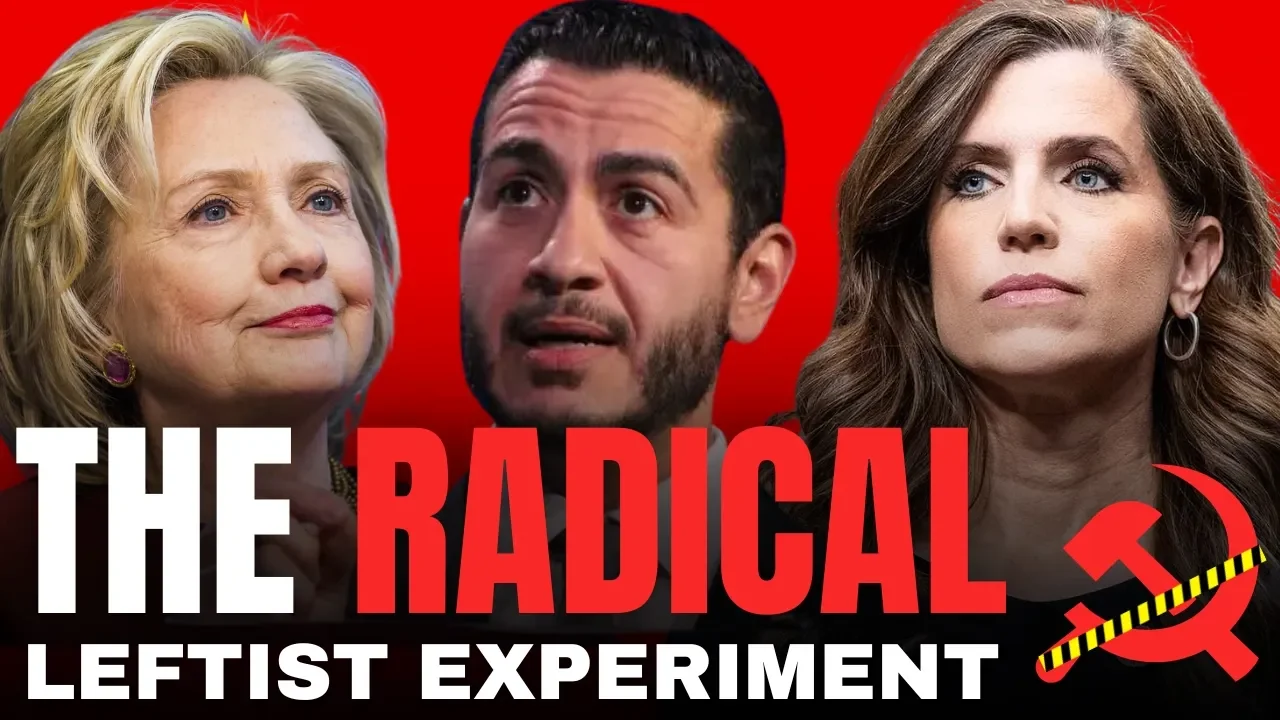
[00:43] All right. Good evening. I said this week has been a little bit strange. Everything that happened this week seemed to be about the same thing. And I'm going to quiz you at the end of the evening when we're done with this after we're done with the live programming and see if you figured it out with me. I don't think anybody planned it that way. But Hillary Clinton was in the Hamptons this week. Somebody asked her about the socialists taking over the Democrat Party. And she said, oh, no, no, no, no. This is just an experiment. And Hillary called it called it healthy. Every experiment is healthy right until the point the thing in the cage in the experiment gets out of the cage. And I checked it out. I looked around and. The cage of that experiment is sitting in Michigan this week tonight. And then I don't want to. OK, I I don't want to. I know that you don't want to. But we are absolutely going to talk about Lindsey Clancy tonight. I can't help myself. I want you to see the tape.
[01:44] We're going to roll the tape about what the psychologist said today in closing arguments. We're going to roll the tape of what her defense attorney said today. And I was shocked. And you will be, too. And give that guy an Oscar because he's earned it. And, you know, of course, I'm going to we're going to talk about Dolly Parton tonight, but we're going to save the best for last. If I started with Dolly, this this show, we wouldn't go very we wouldn't go very far this evening. And so I want to thank you for being here. My first ask of you tonight is to subscribe. Hit the button up there. Subscribe. Like. Put a comment in there. We will apply to it. We do read the comments. But that's how this thing works. We're trying to build our audience on YouTube. And I need you to describe to subscribe this evening. Our first segment is the hot mic.
[03:27] Our second
[03:30] is the hot mic.
[03:40] Our third segment is the hot mic. Our
[04:10] segment is the hot mic.
[04:42] Our fifth segment is the
[05:08] Our sixth segment
[05:21] the hot mic.
[05:33] Our sixth
[05:53] is the hot mic. Our 11th statement is the hot mic. He won by 15,000 votes. So that's what we're dealing with a smart man.
[06:33] practiced as a physician. Now, he said this in a debate in Detroit in front of a room full of pastors. He said it in front of Bernie Sanders at a rally, introduced him. Bernie Sanders introduced Abdul as a physician one time, and Abdul just let it ride. There's even a fundraising email with a picture of him in a lab coat as well. So think about that. Hillary says the party's running an experiment, and the man already owns a lab coat. That's interesting. So Politico did the right thing. Now, Politico did what I don't think most reporters do. And I, you know, let me get this straight. I hate the DC press, okay? I think that they run with ideas and not facts. As much as they have covered me in the press up there, I can't sue any of them because it's all allegedly, even though all of their stories are fake and false and fake news. They hide behind anonymous sources and just, you know, spurt out allegations with no evidence, no video, no recording, no receipts.
[07:37] But this time, they actually, Politico impressed me. They actually got receipts because they actually checked. They pulled Abdul's medical licensing records and medical records in Michigan. They pulled his records in New York and found out that Abdul El-Sayed has no licenses and never has. In either state. Now, he has a doctorate. He has a medical degree. But he was never a physician. He was never licensed. No residency. Never sat for the boards. And the entire hands-on portion of his medical career was for four weeks. Now, back to Politico. They said, and one of the, this is Washington Post now. Washington Post had a headline which was shocking for the Washington Post that Democrats are at odds in Michigan over El-Sayed's ties to a controversial, controversial streamer. So not only was he never a physician in his medical career, but he has ties to Hasan Piker. Hasan Piker is that streamer, the YouTuber who said that America deserved 9-11 and has pictures of the Twin Towers falling down framed in his office so all of his podcast viewers can view it.
[08:50] Back to Politico. Politico said also that it is a weird thing to hang your hat on. In terms of a biographical detail, if you never actually practiced medicine, said a Democrat operative, Adrian Hemmond, it's weird to hang your hat on something that you never actually did because he never practiced as a physician. And then Politico themselves led the article with Abdul El-Sayed for years, has publicly said he's a physician. But there's overwhelming evidence he had no experience as a licensed medical doctor. So only in the Democrat party. Can you call yourself a physician and not actually be one? So Politico and the Washington Post did the work and I want to thank them for it. And listen, I wouldn't touch this next part except for Abdul went first. In 2022, he's on a podcast, he's relaxed, he's having a good time. And he describes, as I mentioned earlier, the four weeks he had to himself for his own medical, his medical career was four weeks.
[09:57] And this is what, he said.
[10:03] My job was to be the like worst doctor on the team, right? But I was like cosplaying a doctor. He says he was cosplaying as a doctor in a four week, Politico calls it four week internship.
[10:18] That is what he said. That is his word, not mine. Everybody hold on to that word because we're going to need it before this is over. Now, before everybody starts typing, I know where I work. I work in a building with 434 members of the House of Representatives. I work in a building with 434 members of the House of Representatives with other people. Every one of us has a bio and that bio is, is very aspirational. I rounded a number of mine and I'm not throwing the first stone at resume inflation.
[10:45] I'd hit someone I like too. So, but Monday night, the same day Hillary is in the Hamptons calling all of this healthy. Abdul went on to Fox News with Jesse Waters and he walked in confident, you know, shoulders up. The first thing out of his mouth, he says he's looking forward to a quote, wholesome conversation.
[11:07] Write that word down because you're going to need it. The word is wholesome and the words are having a rough night tonight. So Abdul and Jesse, they fight about everything. They fight about Iran. They fight about immigration. At one point, Beyonce comes up. I don't know why Beyonce comes up. I don't
[11:31] know who's not. Surgeries on children. Let's get to that part. Sex change surgeries for children and sex changes for minors. Do you support that?
[11:46] Look, you know, I remember having great conversations with my conservative friends about right to try legislation. The idea that the government shouldn't tell you what kind of health care you should have. I just think the government shouldn't tell you what kind of health care you should have. And if you're a minor, you want to try on kids. Now, if you disagree with me, I'm going to tell you what kind of health care you should have. If you disagree with that, if you disagree with that, if you disagree that health care decisions need to be made by a doctor and their parents and a patient, then I just think we agree to disagree. But, you know, you want to put government inside. So Abdul, you're a doctor, right? I am.
[12:20] So you think it's OK for a parent to slash his kids? You think that's OK? I mean, do you really want to have this conversation? Are you circumcised? Yeah, yeah. But I mean, that's a personal question. OK. Doctor, you probably should want to move on. You probably should want to move on. A circumcision is different than castration. I think it's a problem. It's a problem that you think that you get to decide what happens between a parent, a doctor and. Oh, my God. OK, so he went there. And so right to try, according to Abdul, means cutting off your kids dingling as as Jesse said that heavy question and say what you want about Jesse Waters. But he asked a question on his own show on the Fox News Network. And the trap was marked very clearly. Abdul should have been ready for the trap as confident as he was. And he was not right to try means cutting off your kids dingling. And Abdul, who happens to be the smartest man in Michigan, apparently the man who beat sixty five million dollars, the man who promised us a wholesome conversation, asked Jesse Waters if he was circumcised.
[13:30] And, you know, the good doctor doesn't know the difference between castration and circumcision. And so he's going to have to make a decision. And so he's going to have to make a decision. I would not want Abdul Al-Sayed to go near my kid with this or near anyone with a scalpel, let alone my child, since he doesn't know the difference between circumcision and castration. That's pretty scary for a, quote, doctor. Now, I want to ask if if you if you caught that in the middle part of the interview, something happened there. And I want you to see if you caught it. Inside. So, Abdul, you're a doctor, right? I am.
[14:11] So you think right there, Jesse Waters did the beautiful trick and the beautiful trap. He asked Abdul Al-Sayed if he was a doctor and he said, yes, he let it ride. So when you see that detail, it's a detail that everybody missed in the middle of the question, a middle of a conversation, middle of an interview. And Jesse Waters asked it beautifully.
[14:38] Waters calls him, calls him a doctor because that's how Abdul has presented himself. And Abdul took it and he took it for a ride. That man will always take it. Every good socialist will take it. And while that clip was going around the world on Monday night, the scientist, Hillary Clinton herself, was at dinner somewhere in the Hamptons because that's the arrangement. She gets to name the experiment, but she never has to watch it run. And she looked at socialism. Inside the Democrat Party. And the word she picked for it was healthy. Now we're going to move on to the next segment, which is really the face of evil. And this is, I didn't want to get into Lindsay Clancy tonight, but closing arguments were today. We saw some footage yesterday and today of psychologists and psychiatrists that were testifying in this case. And, you know, the president, the mob of moms who are applauding murder is unlike anything I've ever seen.
[15:44] And so we're going to change gears. And I'm telling you up front, I'm not, I'm going to try not to tell any jokes in this segment because this is serious. And in Massachusetts, the trial closed this week and Lindsay Clancy case, 12 jurors are going to have to make the toughest decision of their, of their life. There were 21 days in this case. There were 84, 84 witnesses. Imagine the avalanche of information and data that the 12 jurors have to sift through. And so before the TikTok mob moms come online with the ring lights, cause I can, I can feel them warming up right now. Um, and they're coming on. I can hear them warming up as this, as of this taping right now, or this live slot, there is no, there is no verdict yet. And the defense does not dispute that Lindsay Clancy murdered her kids. And, you know, there's a contingent of women out there that believe Patrick killed the kids. And if Patrick killed the kids, the defense would have used that in their arguments, but they did not because they admit she killed her kids.
[16:48] The only question the jury has to decide, was she criminally responsible for murdering her three children and whether or not what she knew she was doing was right or what she knew she was doing was wrong. And her lawyers say postpartum psychosis meant that she could not wait until you hear what the defense, uh, psychologist said, because prosecutors say she planned it. She knew what she was doing and there was no psychosis. I have two videos for you tonight that we're going to get into the first. Is it typical for someone in psychosis to hear a voice only one time, never before, never after? No. No, he says it absolutely is not. Now check this one out. This one is worth the wait. You need to watch it through the whole thing. The way she described this is happening. She heard a voice that she'd never heard before, experienced an hallucination. She's never experienced it since. She only experienced it for the 18 minutes that it took to kill the children.
[17:51] To put it mildly, that would be a very, very unusual pattern or manifestation of how this kind of thing comes about. I've been doing this kind of evaluation for many, many years. And I'm always very careful when someone tells me that
[18:08] course of committing an offense. Why is that doctor? Why, why are you careful when someone tells you that they only experienced this voice during a criminal offense? Well, because it provides a convenient way of, of lessening your own culpability.
[18:26] That makes the most sense to me, um, in this thing that she would use the idea of psychosis, use the idea of voices in her head. She heard one time while she was murdering her kids. The only time, which they say is not part of psychosis. And the judge has told the jury that they can also consider manslaughter instead of first degree murder. I don't know how I feel about that. I don't like it. I have, I have two children, two children. I know some of, I know many of you have children and grandchildren in the audience tonight. I know something about the inside of a bad year or the inside of a bad decade. And some of you watching have been, have been in one. Some of you have watched somebody you love who's been through this. And some of you have been in one. And some of you have watched aしか in the other two years and I know that too. Uh, and that's why I'm being careful. I actually had postpartum with my second kid. Um, the only difference is I didn't, I didn't murder my children as do most women. Millions of women have postpartum. Um, it was for me, it was inside the first couple of months, no longer than six months, um, probably two to three months where it was the worst for me, but none of us, the rest of us, we don't murder our kids because we had a bad day.
[19:36] Kelly Guilherme- Um, you know, there needs to be justice for the kids. Justice for the yours' kids, Justice for Cora, Dawson, and Callen, they deserve that much. But I've noticed something about our country, that we cannot have a crisis, we cannot have a tragedy, just a tragedy anymore. Somebody has to brand it. Somebody has to market it. People showed up to the courthouse to support Lindsay Clancy. It was coordinated. They wore matching pink shirts. They had the vibe of same Lindsay, same Lindsay. Lindsay, they had signs and they weren't just, you know, made at home signs with markers or crowns, whatever you had in the box. These signs were printed professionally. Somebody paid for professional signs to be printed for the pink mob. And it was all coordinated. And somebody is always selling something within four blocks of the worst day of somebody else's life. And somebody's making money off that. Cora was five. Dawson was three. And Callen was just a baby. And the 12 jurors are going to make the hardest decision they've ever had to decide to make.
[20:40] And I hope, I hope they get it right. And when I say I hope they get it right, and I know that Massachusetts doesn't have the death penalty, but I really want Lindsay Clancy to get the death penalty. And I prefer it to be public.
[20:53] And nothing short of that will give those kids justice.
[21:00] I want you to see, before I move on to Dolly Parton, this disturbed me the most. This is Lindsay Clancy's defense attorney in his closing arguments today. Look at what he says Lindsay Clancy is as a mom. She was a nurse, a daughter, a wife, and a darn good mother. He said she was a darn good mother. Did you catch that? She was a nurse, a daughter, a wife, and a darn good mother.
[21:36] A darn good mother. I don't know any darn good. Moms who murder all three of their children. All right, we're going to move on to Dolly Parton. We're moving on to Dolly. Hello, Dolly. Here she is. I'm very real where it counts, and that's inside and as far as my outlook on life and the way I care about people and the way I care about myself.
[22:01] She's lovely, isn't she? She could do, Dolly Parton could do no, absolutely no wrong. Dolly Parton died earlier this week. She was 80 years old. I have never, I never met her, but her loss is still, it still hit hard, and I think I finally got it. I think it had everything to do with tonight's program, and let me tell you about this woman. One of the 12, she was one of 12 kids who grew up in a small cabin. Her mother sewed her a coat made out of scrap fabric because she didn't have enough fabric. They just had scraps. They couldn't have enough fabric for a coat, and the kids at school laughed at her. They made fun of her. They bullied her, and she wrote a song about that. And they'll be playing that song at funerals for the next hundred years. In 1973, she writes a goodbye song to Porter Wagner, the man who gave her her start because she was leaving his show to go out on her own, and that song is and was titled, I Will Always Love You. And then one day, Elvis Presley calls Dolly Parton, and he calls her, and I need you to understand what this phone call was.
[23:09] It was 1973. In 1974, Dolly Parton was a 27-year-old woman. She was singing country music in Nashville, and the biggest star in the planet, Elvis Presley, calls her on the phone because he wants her song. And Dolly Parton said no because Elvis came with a guy. His name was Colonel Tom Parker. That was Elvis's manager, and Tom Parker says that everything Elvis touches, he gets half, even though it would be Dolly Parton. So he's not going to be able to do that. Elvis Presley would get half of everything ever earned by that song on the radio, licensing rights, every dollar that that song would make, Elvis Presley would make half forever. And Dolly Parton went home that night. She cried herself to sleep. She cried all night, and she woke up the next morning. They called her back, and she still said no. And, you know, she had her rhinestone jacket on. She looked at the biggest star alive and told, Elvis Presley, no, that is a kind of courage and melt that very few people have.
[24:16] That is a different, that is a different kind of animal. And 20 years later, Whitney Houston sings this song in the bodyguard, and it becomes one of the biggest songs ever recorded in American history. And it came, all that money came home to a kid in a cabin in Tennessee because she wouldn't move on one phone call from Elvis Presley. And then, you know, Dolly Parton did what Dolly Parton does. She gave it all away. We don't know how much because she didn't want to have it counted and never, never wanted to. In 1995, she started a nonprofit called the Imagination Library.
[24:57] She was giving away free books for kids from birth until five years old. She did this because her father couldn't read. He never learned to read.
[25:06] And it bothered her her whole life that her father. Didn't know how to read and never learned.
[25:13] 300 million books later is where the Imagination Library is. And, you know, earlier tonight, you heard Abdul get on a podcast and say he cosplayed or cosplayed as a doctor. He pretended to be a doctor. Well, Dolly Parton never cosplayed anything in her life. She wore a fake wig, but she told you it was a fake before you ever asked her. She told you herself. And underneath all of it. It was the most real person in the country that we've ever had. Her family didn't ask for flowers. They asked you to give to the Imagination Library at ImaginationLibrary.com. We're going to move into the last segment of the night. It is called the comment section.
[26:02] All right. Tonight in the comment section, we are going to a comment on YouTube because I asked you guys to watch on YouTube. This one is from Pete D. Genova, and I hope I'm saying it right. I'm running it because it's a question that I get asked often. I currently represent a very purple district. We have about equal Republicans and Democrats who are outnumbered by independents, believe it or not, which is on par with national figures. So Pete writes that the media narrative is a stoked division between between the two parties, but the parties are at 27 percent each and independents are at 43. And when you look at Washington, there are only three independents in all of Congress and the Senate and the House. And one of them is Bernie Sanders. First, Pete. You are right. Second, you're also behind because the latest records from Gallup say that the number of independents in this country has gone up to 45 percent from 43 percent. I'm seeing that in my own district. Independents are numbered at 45 percent. Record high Republicans and Democrats are tied at 27 apiece.
[27:04] So the two parties run the entire country represent a combined 54 percent, just over 50 percent of the people. That's not a mandate. That is a hung jury. Now, of the 45 percent, 20 percent lean Democrat, 15 percent lean Republican, 10 percent don't lead, don't lean anyway. So for some of those folks, independent just means we're just going to vote the same way we always have. We just don't want to tell a pollster about it or argue about it at Thanksgiving. So now on to the three independent examples. We have two in the Senate, Bernie Sanders out of Vermont, Angus King out of Maine, both of them caucused with the Democrat Senate caucus. Then we have Kevin Kiley, who's from California. He's a former Republican. He left the Republican Party in February. He caucuses with Republicans in the House of Representatives. So he is the only independent in the House right now. We have three independents in Congress in both chambers and all three caucus with a party. That's the plumbing. And, you know, Kevin Kiley said this, but you can't get a committee assignment if you don't caucus with the party.
[28:09] Committee assignments and committees run through the party apparatus. If you don't have a team, you don't have a committee, you don't have a committee, you can't help your constituents or the priorities that you said you would legislate on. It makes it very hard for you as a legislator in Congress. So on to the media stoking division. Yes, you're right, Pete. That is the business model. And apparently business is very good. Ross Perot got 19 percent in 1992 and zero electoral votes. Zero, because that was the design working exactly. How it was built. The 45 percent doesn't need a third party. It needs a system that stops charging them a toll for not joining one. So keep the comments coming. Pete, I appreciate it tonight. And if you do nothing tonight, I need you to subscribe now. At the top of the show, I told you that everything this week had something to do with the same thing.
[29:10] They were all related. They were the same thing. And before you go, I'll tell you what it was. If you haven't seen it, I'll tell you what it was. If you haven't figured it out. The same thing between each of these stories is a space between who the person tells you they are or claims to be. And on the other side of that is who they actually are. The reality is what the person actually is, because there's a space there. That's this week. Hillary Clinton named an experiment she'll never have to live in. Abdul El-Sayed put on a physician's coat he never earned. Lindsay Clancy claimed she was in psychosis. She was in psychosis when she murdered her kids, but the experts testified otherwise that she was not in psychosis. And everybody in the news is out here working that space all the time. I work in a building where people make names and run on that space. So then on Monday, we lost one American who, Dolly Parton, who didn't have any of that. What Dolly claimed to be, Dolly was.
[30:12] They were the same thing all 80 years. No space at all. So in a world of people who pretend to be fake, be a Dolly Parton and God bless her tonight.